Beyond AI: the two forces defining the next tech frontier
Unless you’re living under a rock, AI has likely become a topic of conversation in your household at some point or another. While artificial intelligence has existed for decades, the last four years have transformed it from a specialized research field into a dominant force bridging the gap between industries, shaping tech, business, and markets. Because of this surge, many investors are already asking the natural question: what is the next so-called golden ticket? The answer, if there is one, will not come randomly, but rather can be logically deduced by looking at the two bottlenecks that could limit further AI expansion: power and computation.
Nuclear energy and quantum computing are two industries currently in the awkward teenage stage between reality and speculation. Nuclear power already produces real electricity at a meaningful scale, but most of the field’s intriguing investment stories revolve around reactors that are yet to be constructed. Similarly, quantum computing has shown promise through narrow, real-world applications, but its commercial value remains more theoretical than concrete. Together, early signs of potential have pushed these sectors to the edge of mainstream market attention, with investors starting to look past today’s winners and proactively search for those of tomorrow.
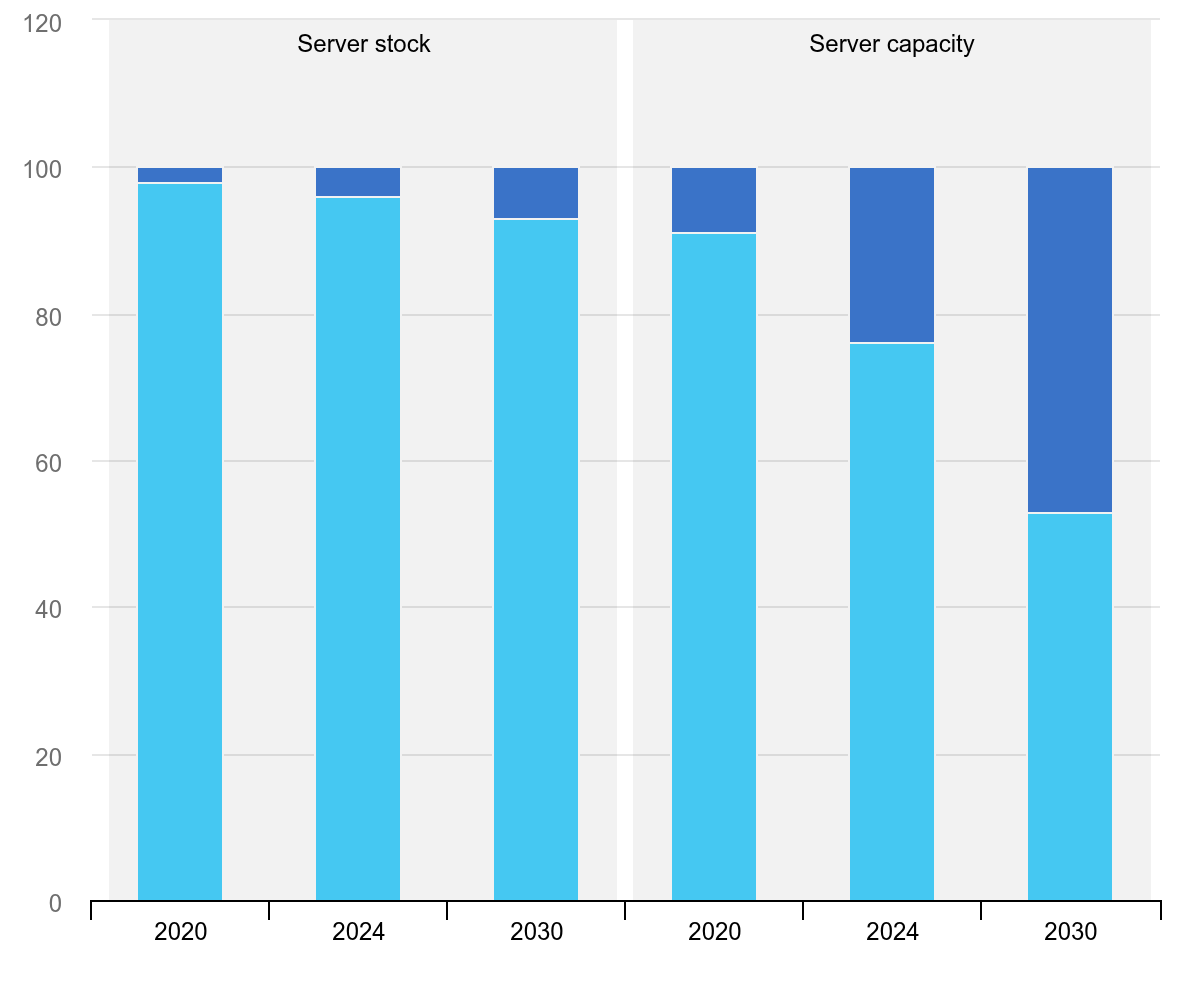
The first major constraint on further AI buildout is physical: electricity. According to the International Energy Agency, data centers used around 415 terawatt-hours of electricity in 2024, accounting for about 1.5% of global electricity consumption. By 2030, that figure is projected to more than double to roughly 945 terawatt-hours, greater than Japan's current total electricity consumption (IEA, 2025). AI is not the only cause of that growth, but it is certainly the primary driver, with big tech firms like Google and Amazon rushing to expand their data center capacity to train and run more advanced AI models. While chips tend to garner most of the attention directed at physical capital in this industry, they’re only useful if there’s enough power to keep them running.
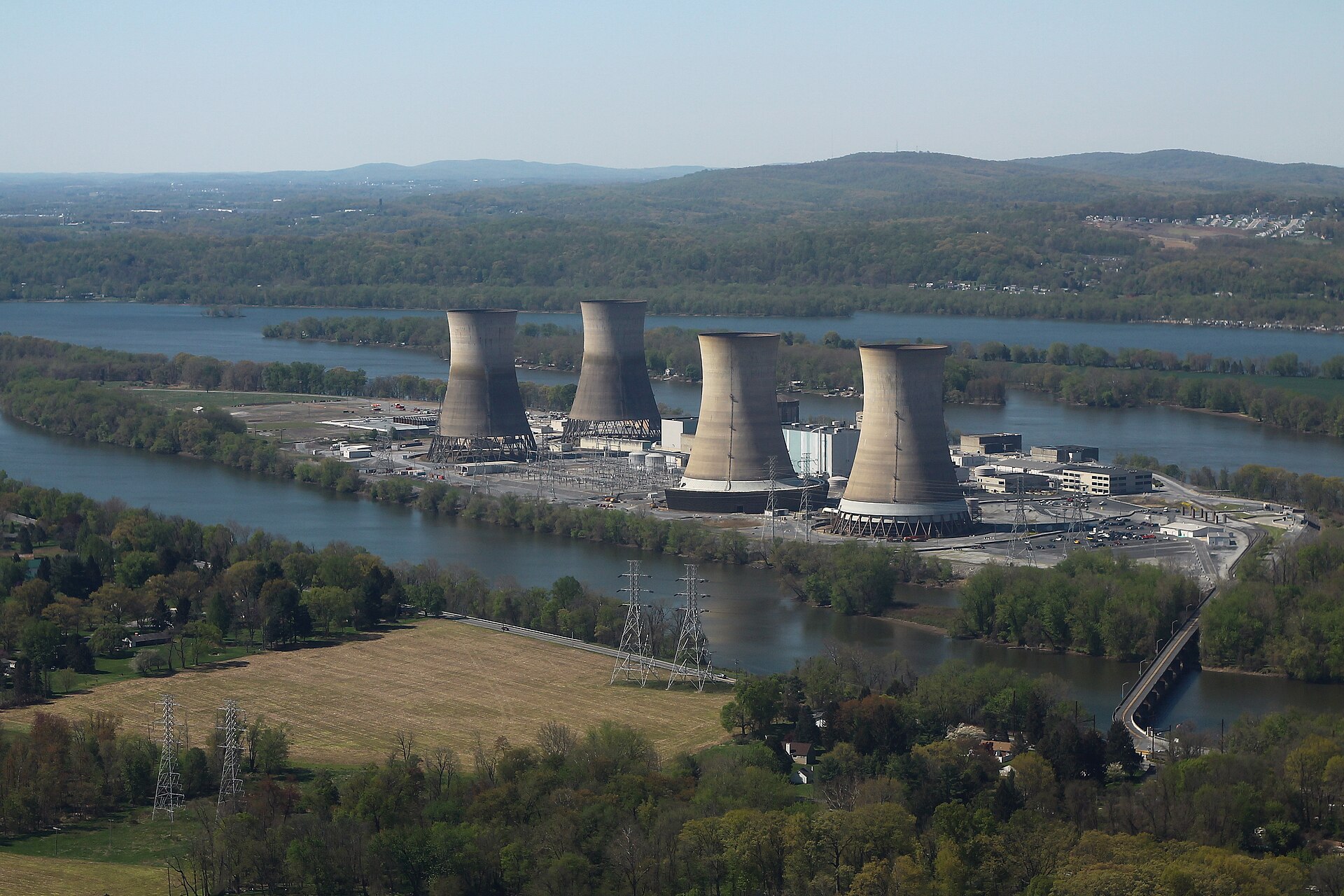
While solar and wind power are crucial parts of the energy mix used to keep data centers running, these methods of power generation are intermittent; they rely on mother nature. In addition, while natural gas is reliable, its massive emissions create problems for companies and nations that have spent years touting their clean energy goals. Nuclear power solves both of these problems because it can provide massive amounts of electricity around-the-clock without further contributing to carbon emissions. In addition, nuclear power plants have a relatively small physical footprint, though they can be expensive, slow to build, and present regulatory problems, making them a less than perfect but still appealing alternative to traditional power-generation methods.
Big tech firms certainly recognize this and are already working to secure the infrastructure necessary to support further growth in this relatively new industry. In 2024, Microsoft signed a 20-year agreement with Constellation, an energy utility firm, to restart a previously closed nuclear reactor in Pennsylvania (Constellation, 2024). Constellation plans to spend around $1.6 billion to fulfill their side of the deal. Similarly, Google signed an agreement with Kairos Power in the same year focused on the development of more advanced, next-gen reactors, with a deadline in 2030 (Google, 2024). Amazon and X-energy have also partnered on a broader plan to construct a pipeline of small nuclear projects throughout the United States (X-energy, 2024), with Amazon leading the charge in X-energy’s $500 million financing round.
The second main factor limiting AI infrastructure expansion in the long run is intangible but no less important: computing capacity. While classical computers process information using bits, which are represented in binary, a computing language comprised solely of zeroes and ones, quantum computers use qubits (pronounced “Q-bits”), which can behave differently because of quantum properties like superposition, the idea that a qubit can exist as both a zero and a one simultaneously until it has been concretely observed, and entanglement, the notion that two qubits can become inseparably linked in such a way that, upon observation, one reveals the state of the other, no matter how far apart they are located. To make a long story short, concepts like these give quantum computers the ability to handle certain problems, especially when it comes to topics like chemistry, physics, optimization, and cryptography, in ways normal computers struggle to match.
Most relevant to AI is the optimization part of things; the training of AI models, which is essentially just one giant optimization problem, is actually the most costly part of the business. In fact, most data centers and water consumption by juggernaut firms like OpenAI and Anthropic are allocated towards the training of new, more capable models that have not yet been seen by the public. The ability to make further advances and train new models more efficiently is therefore highly sought after, and startups, enterprise labs, and even national governments have been experimenting with how quantum computing can revolutionize the AI industry. McKinsey estimates that quantum computing could create up to $2.7 trillion in economic value worldwide by 2035, while revenue generated by quantum computing companies exceeded $1 billion in 2025 and could reach as much as $4.4 billion by 2028 (McKinsey, 2026). Google's Willow chip, an initiative described by the company as a foundational step toward practical quantum machine learning, showed progress in error correction and performed a benchmark computation in under five minutes that would take a supercomputer ten septillion years (Neven, 2024). With frequent advancements like this being made, it’s only a matter of time before hybrid quantum machines are picked up by larger AI firms, which will only create a positive feedback loop of more intensive industry development.
According to Kat Liu, “The investment case is centered on the long-term potential of quantum computing” (Srivastava & Biswas, 2026). Quantum has the kind of upside investors love because the breadth of potential applications is enormous. However, it’s important to realize that the quantum business model as a whole is still young. Quantinuum's Nasdaq debut this week valued the Honeywell-backed company at about $17.6 billion, even though Reuters reported that commercial adoption remains limited and that Japan's RIKEN institute accounted for roughly 60% of its 2025 revenue (Srivastava & Biswas, 2026). Similar to the ongoing AI stock boom, investors are buying into future expectations, which can be even riskier in less mature industries like quantum.
The current problem is that modern quantum machines do not have enough stable qubits to consistently avoid error. They are still very prone to noise, meaning the computers can lose or distort information significantly during a calculation. Due to this, while certain machines may be impressive in a lab environment, they still might not be ready to work on real-world problems. Therefore, when the percentage of quantum firms’ customers that aren’t research institutes or universities begins to rise, the potential for sizable upside in this industry can be considered much more certain.

To circle back, while nuclear energy and quantum computing may seem unrelated, they both can potentially resolve the bottlenecks that will eventually cap the AI boom’s growth. Neither is a replacement for AI, and if anyone tells you that’s the case, they are severely misinformed. Instead, both are extensions of the industry, potentially signalling a future shift in the market’s focus from software and semiconductors toward the next-gen drivers of scale, giving keen investors a more than welcome head start ahead of an possible expansion race that could define the world’s next period of technological progress and innovation. The primary takeaway here should not be to chase every stock related to nuclear energy or quantum computing. However, the industries and ticker symbols associated with them should be very much on every retail trader’s radar. AI made chips and semiconductors explode, and there’s a high chance that nuclear energy and quantum computing are on deck.
References
- International Energy Agency. (2025, April 10). Executive summary: Energy and AI. iea.org
- Constellation. (2024, September 20). Constellation to launch Crane Clean Energy Center, restoring jobs and carbon-free power to the grid. constellationenergy.com
- Google. (2024, October 14). New nuclear clean energy agreement with Kairos Power. blog.google
- X-energy. (2024, October 16). Amazon invests in X-energy to support advanced small modular nuclear reactors and expand carbon-free power. x-energy.com
- McKinsey & Company. (2026, April 28). McKinsey Quantum Technology Monitor 2026: A commercial tipping point. mckinsey.com
- Neven, H. (2024, December 9). Meet Willow, our state-of-the-art quantum chip. Google. blog.google
- Srivastava, P., & Biswas, P. (2026, June 4). Honeywell's Quantinuum valued at $17.6 billion as shares rise in Nasdaq debut. Reuters. reuters.com